Portugal is charcoal made from biomass — essentially partially burned organic material. But unlike charcoal you’d use for a barbecue, biochar is made specifically to stay in the soil or be used as a soil amendment. Read more about biochar in Portugal.
When we’re cutting eucalyptus and mimosa for firewood, we end up with a lot of branches we can’t burn efficiently in our stove. A few years back we realised we could turn that waste into biochar, use it to improve our animal bedding, and then feed it straight into our compost system. It’s become a simple closed-loop process that barely adds any extra work but genuinely improves how our farm cycles its resources.
What is biochar, really?
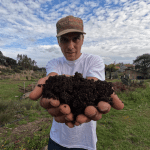
Biochar is charcoal made from biomass — essentially partially burned organic material. But unlike charcoal you’d use for a barbecue, biochar is made specifically to stay in the soil or be used as a soil amendment. The key thing about biochar is its structure: it’s got a huge surface area packed with millions of tiny pores. This makes it incredibly good at holding water and nutrients, and at hosting beneficial microbes in the soil.
In Portugal especially, where a lot of our soils are acidic and depleted, biochar can help. It doesn’t fix poor soil on its own, but it acts like a sponge and a living space. Add it to compost or use it in your beds and it improves water retention and soil life. It also locks carbon in the ground for a very long time — we’re talking centuries.
How we make Biochar Portugal
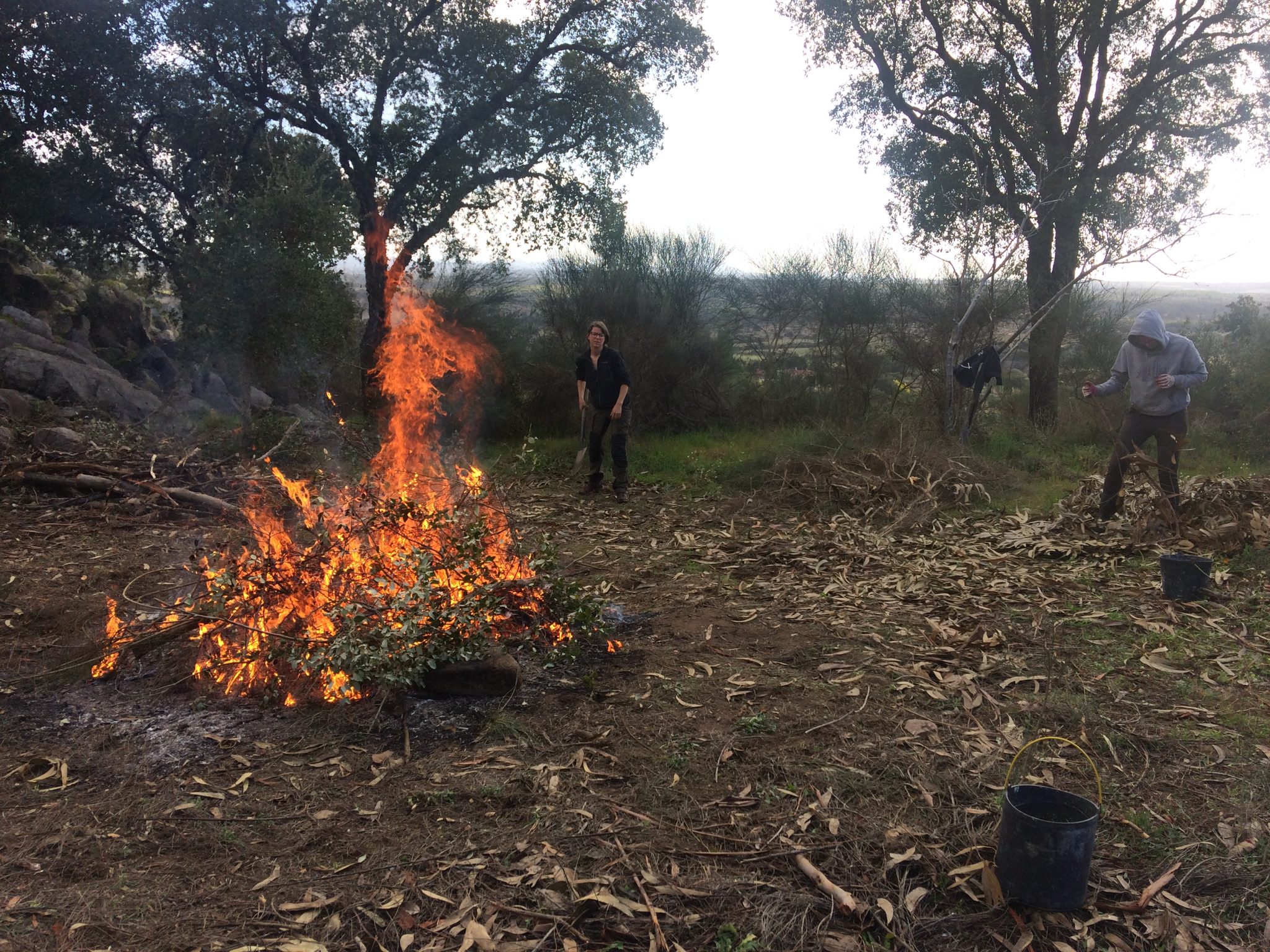
We do it the simple way: dig a hole, make a bonfire from our waste branches (mimosa and eucalyptus mostly), let it burn down to charcoal, and then smother it with earth to stop the burn. That’s it. It’s not elegant but it works.
There are better methods if you’re serious about scale. A proper biochar kiln — things like a top-lit updraft kiln (TLUD) or a retort system — gives you more control, cleaner burns, and better yields. We’ve looked into building one, and it’s on the list, but for now the ground bonfire does the job for 5 cubic metres a year, which is what we use.
The basic steps:
Pile branches in and around a dug pit
Set it alight and let it burn down to charcoal (couple of hours)
Cover the whole thing with soil and earth to smother the flames
Let it cool completely (usually overnight)
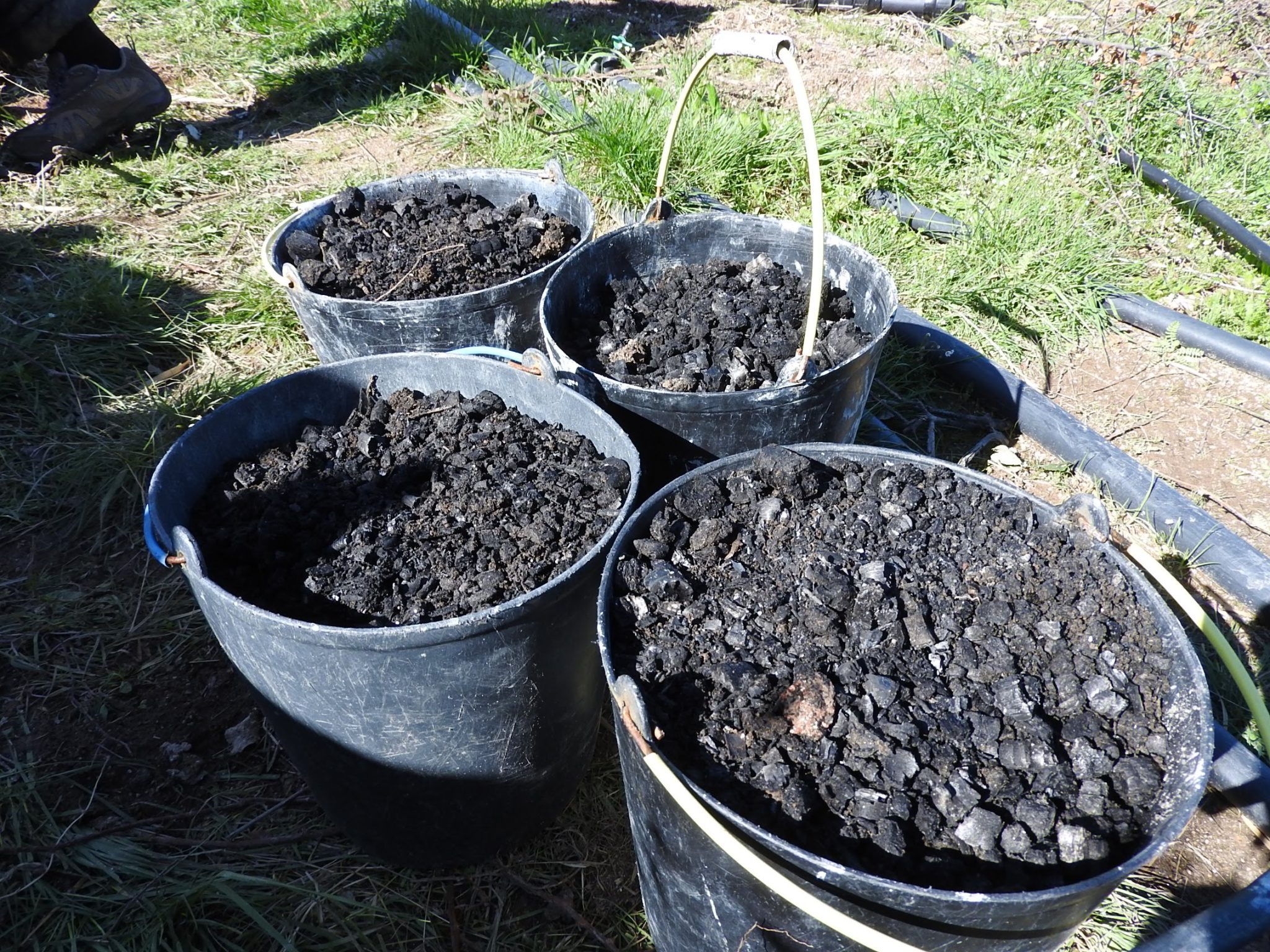
Dig it out and break up the charcoal pieces
Using biochar as animal bedding
Raw biochar can smell quite sharp and dusty, so we don’t put it straight on the animals. Instead, we use it mixed into deep bedding for our sheep and chickens. The biochar absorbs moisture and ammonia — the smell that builds up in animal housing. It also activates as it absorbs the animals’ manure and urine, picking up nutrients and microbes.
We add a layer of biochar mixed with our usual bedding materials (hay, straw, wood shavings, whatever’s available), and the animals live on top of it. Over weeks and months, they walk it in, their manure activates it, and the whole thing gets richer.
Building compost from biochar bedding
After a few months, the spent bedding — now full of activated biochar, animal manure, and microbial life — goes into our compost pile. This is where the closed loop gets interesting. The biochar in the compost acts as a microbe haven and helps the pile hold moisture and nutrients. When we finish the compost and spread it around the barn and in our growing areas, the biochar goes into the soil with it.
We’re not measuring this scientifically, but anecdotally, compost made with biochar-bedding feels richer and breaks down more consistently than compost without it.
Why this matters for Biochar in Portugal
Portuguese soils, especially here in central Portugal where Keela sits, tend to be acidic and often depleted after centuries of agriculture. Most of our land needed serious building up. Biochar won’t fix acidic soil on its own — you still need to manage pH properly — but it helps. It acts as a buffer, holds onto the good stuff you add, and creates a living space for the microbes that actually build soil fertility.
It also fits neatly into a permaculture approach: we’re not importing expensive amendments. We’re turning our own waste into something useful, activating it through our animal systems, and cycling it back into the land. That’s the whole point.
What’s next
Making biochar is simple enough that anyone with waste branches can try it. If you’ve got eucalyptus or mimosa clearings, a bonfire, and some animals, it’s worth experimenting with. We’re still learning — proper measurement of what biochar actually adds to our soil would be useful, and building a kiln to improve our process is still on the list.
If you’re interested in how we think about soil, animal systems, and closing loops on a farm, that’s exactly what the Permaculture Design Course explores. Check out the course page or get in touch if you’d like to know more.
Related Posts:
How to manage invasive Mimosa trees by Laurence Manchee April 18, 2025 How to manage mimosa and invasive species trees. How to kill mimosa trees and what uses do mimosa trees have. How to Kill mimosa The…
Permaculture Design Course Schedule by Laurence Manchee August 2, 2026 Permaculture Design Course Portugal Permaculture Design Certificate More Info Thank you, please find more information about or Permaculture Design Course here. It is a big…
Breed Worms Like a Pro by Laurence Manchee December 9, 2024 This article was published in Permaculture Magazine. I have a subscription to this magazine and can highly recommend it. Click here to subscribe to Permaculture…
Permaculture Apprentice Portugal by Laurence Manchee December 9, 2024 Established permaculture farm Permaculture Apprentice Welcome to the Permaculture apprenticeship program in Portugal. Join our Permaculture community and deepen your skills in community management, permaculture…
The Yield of an Olive Tree by Laurence Manchee March 1, 2026 At our farm, nothing from the olive tree is wasted. From timber and leaves to fruit and oil, every part has value. The olive tree…
Organic Gardening Course by Laurence Manchee October 18, 2026 Certified Organic Farm Organic Gardening Course Join us for a one week Organic Gardening Course and learn about many aspects of growing nutrient dence, organic…
Permaculture Farm Stay Portugal by Laurence Manchee July 21, 2026 Established permaculture farm Permaculture Farm Stay You are welcome to stay and experience our off-grid permaculture farm in Central Portugal. Find out what off-grid living…
Erasmus+ KA131 Traineeships in Portugal by Laurence Manchee August 3, 2026 KA131 Student Mobility for Traineeships Erasmus+ Traineeships at Keela Permaculture Farm We host Erasmus+ traineeship students at the farm and education centre here in central…