VET Host Permaculture Farm in Portugal
ErasmusPro Placements Portugal | VET Host Farm
We host long-term Erasmus+ placements for vocational learners at the farm and education centre here in central Portugal. If you are studying at a vocational college, technical school or apprenticeship programme in Europe, and you want to spend three to six months doing real regenerative agriculture, land restoration, catering or media work, your own college can fund it.
This page explains how it works, what you would be doing here, and how to set it up. Our host organisation OID is E10340911.
What ErasmusPro actually is
Erasmus+ funds long work placements abroad for vocational learners. The formal name is Long-term Learning Mobility of VET Learners. ErasmusPro is the name everyone uses. The short version:
- You find a host organisation abroad. That is us.
- Your own college approves the placement and gives you a grant.
- You, your college and we sign a Learning Agreement before you travel.
- You come and work here for between 6 and 12 months.
- At the end we assess you against the agreed learning outcomes and contribute to your Europass Mobility document.
The grant comes from your college, not from us.
If you are a mobility coordinator or international officer, see the section for coordinators near the bottom of this page.
Who can come
You need all three of these:
- You are doing a practical or vocational qualification, not a university degree. Trade school, technical college, agricultural college, apprenticeship, hospitality or catering school, adult retraining. Depending on your country you might call it MBO, Berufsschule, escola profissional, lycée professionnel, istituto tecnico, or something else entirely. Erasmus+ calls all of it VET. If you are not sure, your Erasmus coordinator will know.
- Your college takes part in Erasmus+ and holds funding for learner mobility. Most do. Ask.
- You are 18 or over.
Recent graduates can also come, up to 12 months after finishing.
If you are at university rather than a vocational college, this is not your route. We host university trainees too, under a different scheme. See our KA131 traineeships page.
Way 1
Six month placement
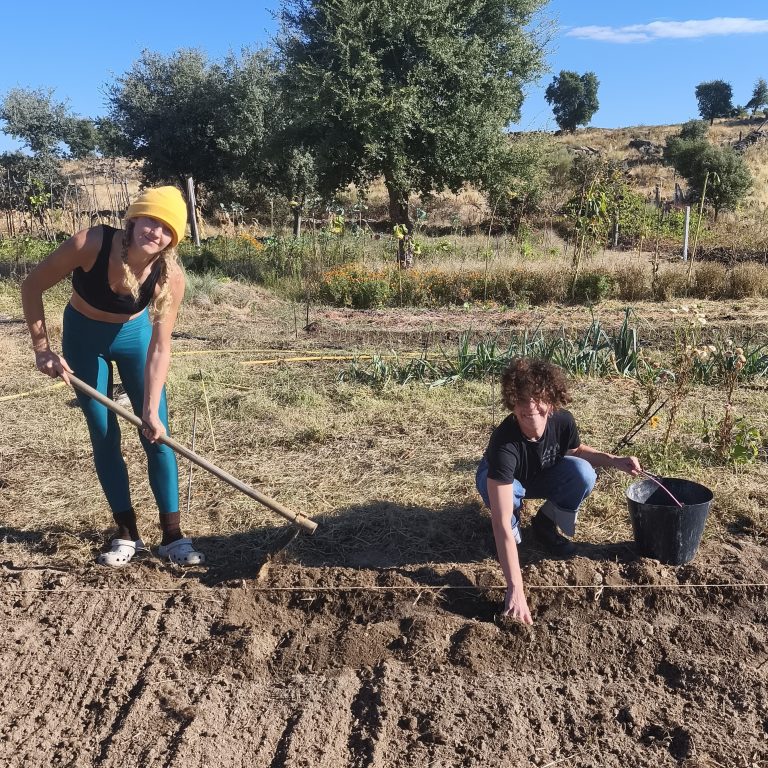
The standard route and the one we recommend. Six months means you span two seasons, you are properly useful by month three, and you take a real piece of work through from planning to finished.
Weeks one to three are induction. From week four you are on your track with increasing responsibility. Around week thirteen we do a mid-placement review. The second half is your lead project, something defined that is yours to deliver.
Way 2
Twelve month placement
Possible, but only as an extension of a six month placement, decided at the mid-placement review rather than committed to at the start.
That is deliberate. Six months on a remote farm suits some people enormously and does not suit others, and neither of us can honestly tell which at the application stage. Extension needs your college to have the budget and to amend the Learning Agreement, so mention the possibility to them early.
Way 3
Three month placement
Available where your college timetable does not allow six months.
Be aware that the first three weeks are induction and the last week is assessment and handover, so a three month placement gives you around nine properly productive weeks. It works, but you get noticeably less out of it than the six month version.
What you would actually do
This is a working farm, not a classroom.
Everyone starts with the same three week induction: safety and tools, how the whole place works as a system, the seasonal cycle, and basic Portuguese. After that you take one of the tracks below, and that becomes most of your working week.
Horticulture and Food Production
You get your own growing area for the whole placement. Crop planning, propagation, bed preparation, soil assessment, irrigation, pests and disease, composting, harvest and storage, and keeping the production records that tell you what to do differently next season.
Suits agriculture, horticulture and organic food production programmes. Runs April to September.
Land Regeneration, Soil and Water
Reading a landscape for water, using levelling instruments to mark contour, setting out and building water retention earthworks, erosion control, choosing species that survive a Portuguese summer, planting and establishing trees, monitoring how land condition changes, fire risk.
Suits forestry, environmental management, landscaping and green skills programmes. Runs October to March, because that is when this work actually happens.
Education and Hospitality Delivery
Preparing a residential site for groups, participant communication before during and after, supporting the delivery of our courses, catering, bookings and records, gathering feedback and doing something with it.
Suits tourism, hospitality, business administration and community education programmes. Year round.
Kitchen and Farm-to-Table Catering
Menu planning around what actually got harvested rather than what you ordered, costing and stock, three meals a day for up to twenty people, food hygiene, preserving, whole ingredient use, and leading a small kitchen team including volunteers with no training.
Suits culinary arts and catering programmes. Year round.
Digital Communication and Content
Content strategy, filming and editing short form video outdoors in a working environment, photography and copy, publishing schedules, reading analytics and changing what you do because of them, structuring educational content for online delivery.
This qualifies as a Digital Opportunity Traineeship. You would spend a lot of time filming and editing explanations of permaculture design and land management, which means you finish knowing the subject as well as the production side. The portfolio you build is yours.
Suits digital marketing, media production and communications programmes. Year round.
Natural building and animal husbandry run as additional modules alongside any track.
A week is roughly six hours a day Monday to Friday, one afternoon of whole farm teaching, and an hour one to one with me. Weekends are yours.
What the grant is worth
our college pays the grant, not us. The exact amount is set by your own country’s National Agency, so it varies. Only your mobility coordinator can tell you your real figure. As a rough guide:
- Portugal sits in the middle cost of living group for VET learners. The published band is 41 to 110 euros a day, with each National Agency setting where in that band its learners fall.
- The full rate applies for the first 14 days. From day 15 it drops to 70 per cent. On a six month placement most of your time is at the lower rate, so do the sum properly rather than multiplying the headline figure by 180.
- There is a separate travel contribution on top, with a higher rate if you travel by train, bus or shared car rather than flying.
- ErasmusPro placements get an extra 150 euros of reinforced linguistic support.
- Learners with fewer opportunities can get additional support. The criteria are set nationally, so ask.
Be realistic about this. The grant is a contribution towards living costs, not a wage. Your accommodation and meals here are paid out of it and you keep the rest
For VET coordinators
This section is for mobility coordinators, international officers and work placement staff.
We host under KA1 Long-term Learning Mobility of VET Learners (ErasmusPro), and also take short-term learner mobility of 10 to 89 days. Our OID is E10340911. No accreditation is required for a hosting organisation, but we can provide an organisation profile, insurance details, the placement programme in learning outcome format, and a signed acceptance letter for your files.
We can map our learning outcomes onto your qualification framework. Send us your unit specification and we will do that work rather than asking you to do it.
Organisational support for ErasmusPro is 500 euros per participant and is intended to cover costs incurred by both the sending and hosting organisation. We ask to agree a division of that when we set the partnership up.
Preparatory visit funding of 680 euros per person is available for up to three people, and we would rather you came and saw the place before sending anyone. Get in touch and we will host you.
The 2026 Erasmus+ Programme Guide names rural development, sustainable farming, management of natural resources and soil protection as areas for special attention, and applications are assessed partly on whether they support ErasmusPro activities. A long placement here scores on both.
We are small. We would rather host two learners well than six poorly, and we will tell you honestly if we do not think a learner is a good fit for the site.
How to apply
- Complete our enquiry form, telling us who you are, what you are studying, when you want to come and for how long, and what you want out of it. Tell us your college and whether you have spoken to them yet.
- Find out who handles Erasmus+ at your college. The job title varies. Reception or your course tutor will know.
- Email them. Do not wait until you have worked everything out. Send them this page.
- Expect it to be slow. Colleges usually apply for funding once a year, often around February, for placements starting from June onwards. If you want to come in autumn 2027, start the conversation now.
- If they say yes, they contact us and we set up the Learning Agreement together. You do not have to organise that part.
If your college has never sent anyone to a host like us, that is normal and not a problem. We will talk them through it.
Email you can send to your coordinator
Copy this, fill in the brackets, and send it.
Subject: Erasmus+ ErasmusPro placement enquiry
Hello,
I am on the [course name] programme. I would like to ask about doing a long-term Erasmus+ mobility placement.
I have found a hosting organisation in Portugal: Keela Permaculture Farm, OID E10340911. They host VET learners for three to six months under ErasmusPro, working in [track you are interested in].
Their information page is here: keelayogafarm.com/erasmus-erasmuspro-placements/
Could we talk about whether this would be possible, and what the deadlines are for the next round of funding?
Thank you, [your name]
Permaculture Design Course Portugal
Your host and mentor
Laurence Manchee
PDC Lead Teacher
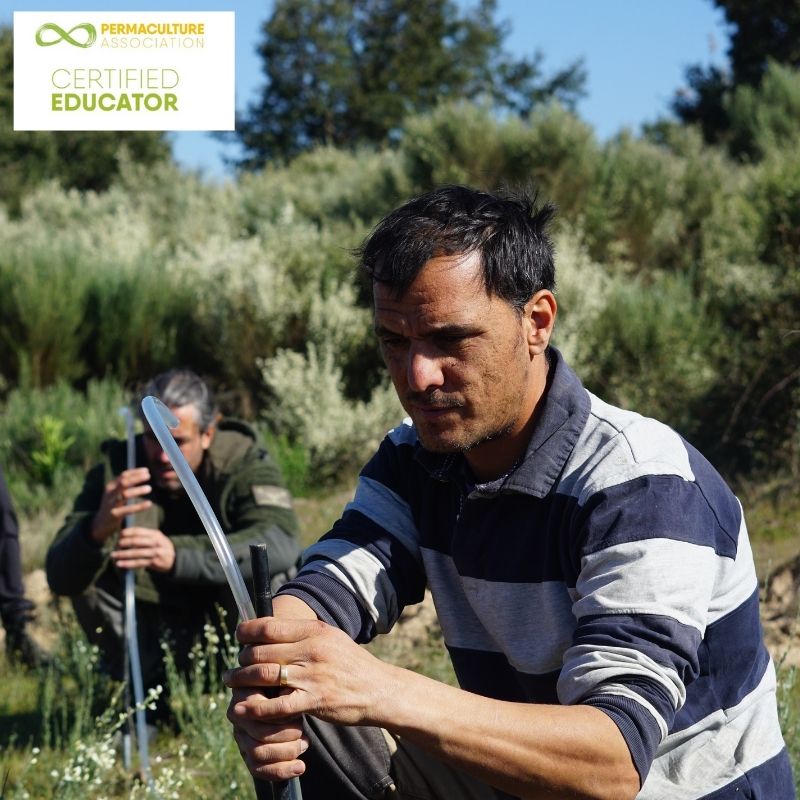
Co-founder of Keela Permaculture Farm. Laurence is certified by the Permaculture Association to teach certified PDCs. An author in Permaculture Magazine and teacher of Agroforestry, Permaculture Design and Natural Building Courses. Laurence will be the lead teacher on all courses. Laurence has lived a permaculture life at Keela since 2016. He is a farmer, shepherd, gardener, builder and homesteader.
What our past students have said
Google and Facebook Reviews
Join the mailing list
Don’t miss out on this opportunity to gain the knowledge and skills needed to create sustainable systems that benefit both people and the environment. Find our about courses, new blog posts and new opportunities.
Please sign up here to get more info