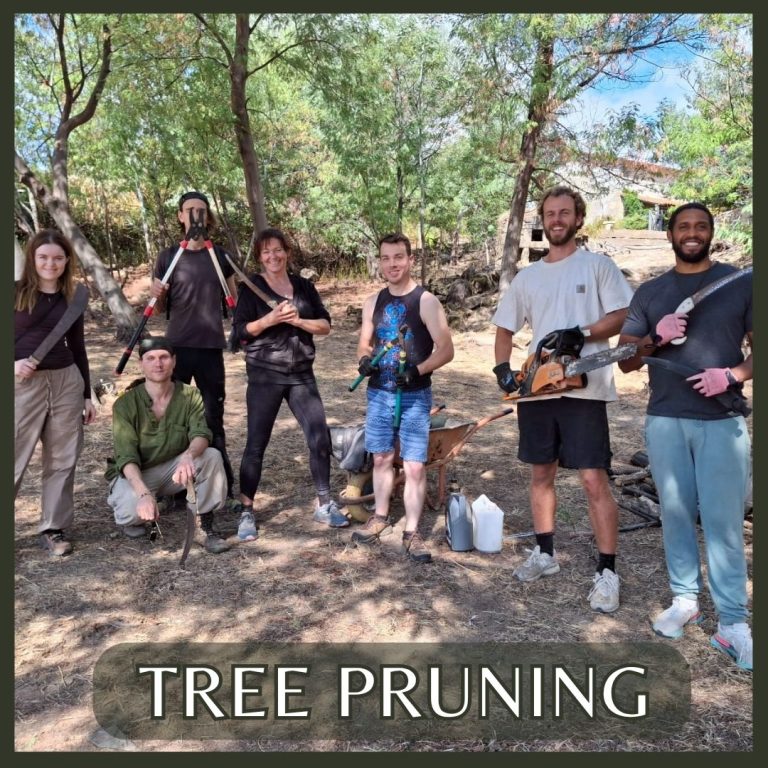
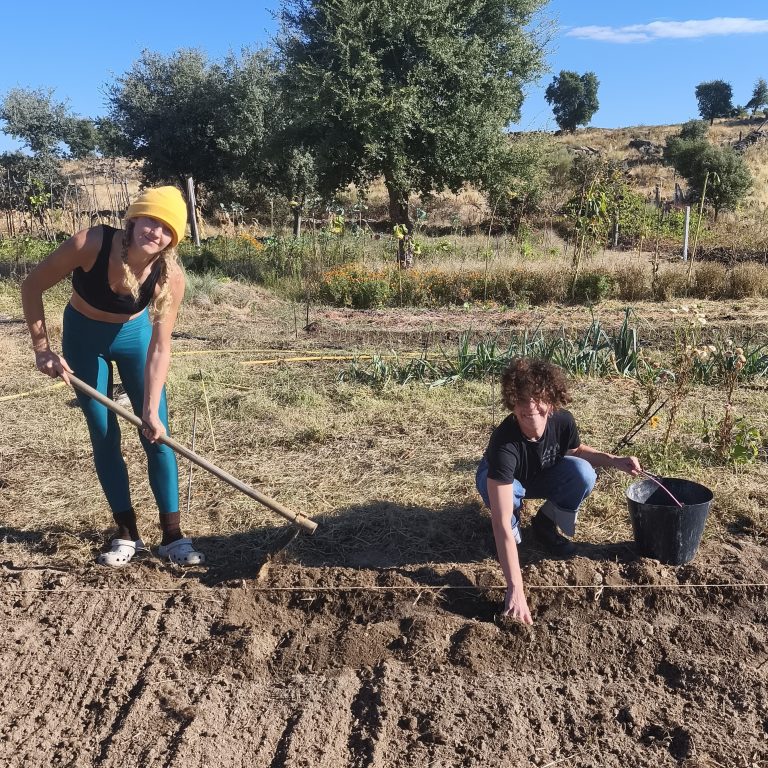
The history of Póvoa Palhaça in Fundao, one of the two villages our farm sits between.
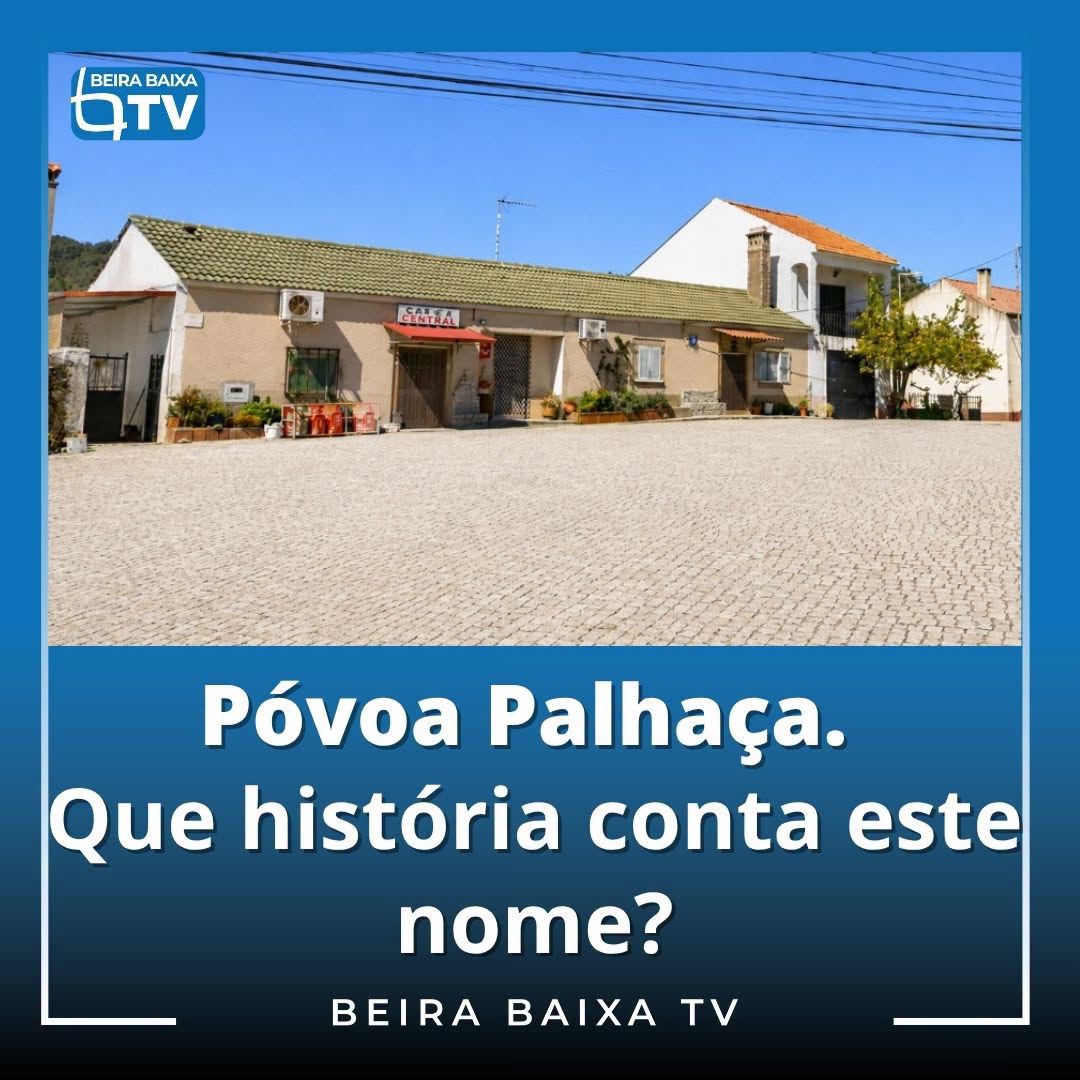
This is one of the two cafes we visit for a beer or coffee or to meet local people and friends to exchange goods and ideas.
“Póvoa” and “Palhaça” break down like this:
Póvoa — an old word meaning a small settlement or hamlet. It reflects the earliest waves of people settling and occupying the region, likely dating back to the early Middle Ages.
Palhaça — despite looking like it’s related to the modern Portuguese word for “clown” (palhaço), it actually has nothing to do with that. It comes from palha (“straw”) and refers to a straw-thatched roof — a traditional rural building technique once used in the area.
So together, “Póvoa Palhaça” essentially means something like “the straw-roofed settlement/hamlet” — a name describing what the original houses there were built like, not a reference to any person or performer.
Translated article about this village by Beira Baixa TV
The toponym of a land — that is, the name of a place — is the guarantee of its continuity. Every toponym carries a legacy that crosses time and projects that place into the future. Toponyms are living witnesses of history and of the relationship between communities and their territory. They function as a living archive of history.
Beira Baixa TV sets out on an adventure to rediscover the intrinsic meaning of place names — places that preserve in their name the memory of their origin, built up over centuries. It is considered an unusual and peculiar name.
Póvoa Palhaça is a place in the former parish of Vale de Prazeres, now part of the merged parish of Vale de Prazeres and Mata da Rainha, in the municipality of Fundão, district of Castelo Branco. It has a privileged, strategic view over the Beira Baixa plain, from which the iconic historic village of Monsanto can be seen in the distance.
Beira Baixa TV turned to the José Alves Monteiro Municipal Archaeological Museum in Fundão to learn the origin of this curious toponym. First, however, the museum’s director, Pedro Salvado, explains that toponymy is more than the science of place names: it’s a heritage that still identifies the spaces of everyday life, though toponyms are also a record of time, and their original meaning has often become obscured or attached to images that don’t match the historical reality behind them.
That’s the case with Póvoa Palhaça, whose name is made up of two distinct elements: Póvoa and Palhaça — the first being the older of the two. According to Salvado, it designates a small settlement, often linked to the earliest processes of occupation and population settlement in the region, most likely dating to the early Middle Ages.
Palhaça, meanwhile, has nothing to do with clowns or the circus. Instead, it preserves the memory of a building technique that once characterized the place. The museum director explains that the term doesn’t refer to any figure or character, as its modern usage might suggest — it designated a type of roof covering made of straw, a traditional technique used in rural construction.
Póvoa Palhaça currently has around 50 registered residents, joined by about 20 unregistered residents — both Portuguese citizens and members of the foreign community living in the surrounding hills and outskirts of the village. Notably, it has a high number of children — around 18 — aged between 3 and 17.
These numbers grow on weekends, with the arrival of family members, especially those who work or live outside the Fundão municipality but remain strongly connected to the land and community.
That was the case for Carmen Curralo Macedo, 41, before she decided to move “lock, stock, and barrel” back from France eight years ago, on August 31. She explains that when it was time to decide where to return to, they chose here rather than the chaos of the city — traffic had already become overwhelming, right as mass tourism was picking up, and on holidays in Porto they’d felt suffocated.
Her grandparents’ house (grandfather originally from Mata da Rainha, grandmother from Martianas, Orca) in Póvoa Palhaça was waiting for Carmen and her family, who found there more than just a place — a way of life. She describes peace and quiet, no noise, everything calm; people know each other well, and these days neighbours come knocking to bring her fresh little tomatoes or lettuce — community support that works, with everyone getting along.
On returning, Carmen found a place where time seems to have stood still — and that’s not without its downsides: as far back as she can remember, the road has stayed the same, and there’s still no basic sanitation.
From the top of her house, Carmen can see Monsanto: climbing a little way up the hillside, the views are beautiful. The isolation created by the pine forests and rock formations surrounding Póvoa Palhaça is, at the same time, one of the things that makes this place unique.
Residents may not always know the origin of the place they live, as is the case for Carmen, who only knows the stories her grandfather used to tell about the origin of the name Mata da Rainha — a tale of kings, queens, and beheaded princesses.
But here, there isn’t a resident who doesn’t know the Pedras dos Olhos (“Stones of the Eyes”), a set of traditional rock formations that are part of the local micro-geography and the community’s collective memory.
Nor is there a resident who doesn’t know José Belmiro and Maria Alice, owners of the Café Central, the village’s only café/mini-market. As the name suggests, it sits in the centre of Póvoa Palhaça, in the Largo do Reduto. He is 86, born and raised in Póvoa Palhaça; she is 81.
Their daughter, Glória Rocha, dreads the day when, after around 45 years in business, the doors will inevitably have to close — because the café is more than a shop, it’s an important meeting place where residents gather and chat; as she puts it, everyone here is like family, a peaceful place where nothing much happens.
The village’s current, reliable profile is given to Beira Baixa TV by Paulo Boavida, president of the merged parish of Vale de Prazeres and Mata da Rainha: the local population remains closely tied to traditional activities, predominantly agriculture and livestock farming.
Boavida notes that the community has a fairly high average age, though there are also some younger couples — from the 1980s/90s generation — who remain connected to the village.
One of the village’s main celebrations, and an important moment for families and friends to reunite, is the Festival in honour of Nossa Senhora das Dores (Our Lady of Sorrows). This year it was held on May 30 and 31, bringing together resident villagers along with many people originally from Póvoa Palhaça who now live elsewhere.
On the archaeological heritage front, Boavida highlights the Castro da Covilhã Velha (hillfort): it likely originated in the Iron Age, attributed to the Lusitanian peoples, and was later reused and reoccupied during the Middle Ages, when a military fortress was built reusing part of the existing structures and stones. Visible remains at the site include a double, oval-shaped defensive wall circuit, along with various piles of dressed and rough stonework.
Despite its small population and the challenges it still faces in terms of infrastructure and essential services, the parish president believes Póvoa Palhaça continues to preserve a strong identity — shaped by farming, livestock, religious traditions, historical and archaeological heritage, and above all by its people’s deep connection to the land and to their community.
Permaculture Design Course Schedule by Laurence Manchee August 2, 2026 Permaculture Design Course Portugal Permaculture Design Certificate More Info Thank you, please find more information about or Permaculture Design Course here. It is a big…
Permaculture Farm Stay Portugal by Laurence Manchee July 21, 2026 Established permaculture farm Permaculture Farm Stay You are welcome to stay and experience our off-grid permaculture farm in Central Portugal. Find out what off-grid living…
Erasmus+ KA131 Traineeships in Portugal by Laurence Manchee August 3, 2026 KA131 Student Mobility for Traineeships Erasmus+ Traineeships at Keela Permaculture Farm We host Erasmus+ traineeship students at the farm and education centre here in central…
Breed Worms Like a Pro by Laurence Manchee December 9, 2024 This article was published in Permaculture Magazine. I have a subscription to this magazine and can highly recommend it. Click here to subscribe to Permaculture…
Erasmus Program Permaculture by Laurence Manchee July 20, 2026 Join us in central portugal for your Erasmus program at our permaculture project Three EU Routes to Visit Keela Permaculture Farm: Erasmus, Erasmus+, and Erasmus…
Permaculture Apprentice Portugal by Laurence Manchee December 9, 2024 Established permaculture farm Permaculture Apprentice Welcome to the Permaculture apprenticeship program in Portugal. Join our Permaculture community and deepen your skills in community management, permaculture…
Erasmus+ Placements in Portugal | Host Organisation by Laurence Manchee August 2, 2026 Permaculture Education in Portugal Erasmus+ Placements Portugal Keela is a working regenerative farm in central Portugal. People come here to learn permaculture, natural building and…